The Myth of Teacher Magic
I came into teaching public schools in a rather unusual way. After years training and working as an artist, my body staged its own retirement and it took some time to figure out what to do next. Teaching dance, theatre, circus techniques was something I knew I was good at. Having watched my parents manage chaotic and rambunctious spaces full of students of all ages, teaching felt like a natural territory.
With a vague idea of taking a step towards achieving my lifelong dream of travelling in Asia, I took my English teaching qualification and soon landed in Vietnam.
Four years have somehow slipped by. Over this time I have learned a lot about teaching in public schools within the rather rigid frame imposed by the authorities in this country. It has been a challenge for me as an artist trained to spot the scaffolding so I could dismantle it, to be an effective teacher within the cultural and regulatory framework imposed by educational institutions that, not unlike the countries I’m from, are full of excellent people passionate about their work, but also seem to prioritise self-preservation over creativity and enthusiasm.
It has gradually become easier to work within this strictly regulated framework while giving my students the opportunity to experience the joy and excitement of learning a language despite it being a school subject and therefore perceived as obligatory and boring.
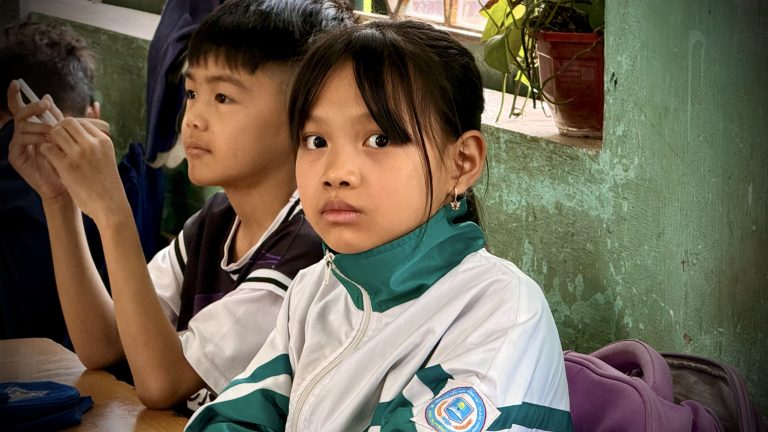
I have tried very hard to embed myself within the culture and strive to be part of the community where I teach. Despite inevitable mistakes, I have been welcomed into the inner circles of some of my dearest students’ families. I often visit them, share meals, attend birthdays, and participate in the events they are performing in. Sometimes their parents talk to me about their doubts and fears, share their small dramas and mishaps alongside their triumphs and joys. I’m not entirely sure what earns me such generous access to their world. Whatever the reason, I am continually moved by their willingness to let me into their lives, as it is endlessly interesting for me to discover their culture and ponder their ways.
I also like how they demonstrate their generosity towards me. They are not obsequious and humour comes naturally to a people who, despite their reputation for oblique communication, can be delightfully blunt. It is within these families that I can witness the consuming devotion these parents wrap around their children. A tenderness in which, thanks to them, I am allowed to share at least in this particular moment of their children’s lives.
The weight of this gift often makes me wonder how to repay it and live up to the esteem and trust the parents put in me. Although I am always welcomed warmly, I feel it my responsibility to figure out my position in relation to the children. I am not family nor am I just a tourist. I am an educator and I should think about the value I am bringing into their lives beyond that of good company. Not only is that my responsibility, I feel it is the best way to preserve a healthy relationship, and also to challenge myself as a foreign educator to see what good I can realistically achieve despite my current linguistic limitations.
There are many stereotypes of our profession. The negative ones do not interest me at all and I cannot say I am much aware of them at all. Rather the misty-eyed, self-mythologising ones that can be found plastered over social media: “I change the world, I’m a teacher!” or “I’m a teacher, what’s your superpower?” and other such similar platitudes. I have always felt uncomfortable with these kinds of quotes, which seem engineered to deliver a warm glow of self-satisfaction. Who are these for? They seem to exist mainly to make teachers feel better about themselves which is perhaps a sign that something in the job isn’t working..
I understand the gratitude a healthy society should show its educators and although teacher authority is increasingly undermined by technological advances and the broader currents of modern societal and global change here as it is elsewhere, I appreciate that Teachers’ Day is a relatively important event in Vietnam. It reflects a culture that considers teachers not merely as service providers subject to every parental whim, but as genuine experts with a deep commitment to imparting knowledge. To deserve such consideration, however, we must hold ourselves to high standards and resist complacency about our role in the world.
I started thinking about this after one of my students’ mums wrote me this message: “The teacher ignites the passion.” It is perhaps not my most endearing trait to always want to disagree with any sentence I hear, but this sweet, well-intentioned phrase stuck with me. Is it true? I can remember with great fondness and admiration many of my teachers, mentors and masters, and although it would be easy for me to say that they “ignited” a passion in me, I am not sure that is so. Now that I am a teacher and have accumulated a lot of experience teaching both academic and artistic subjects, I cannot help but feel that I cannot help but feel that my teaching alone isn’t responsible for whether a student becomes interested in what I’m offering.
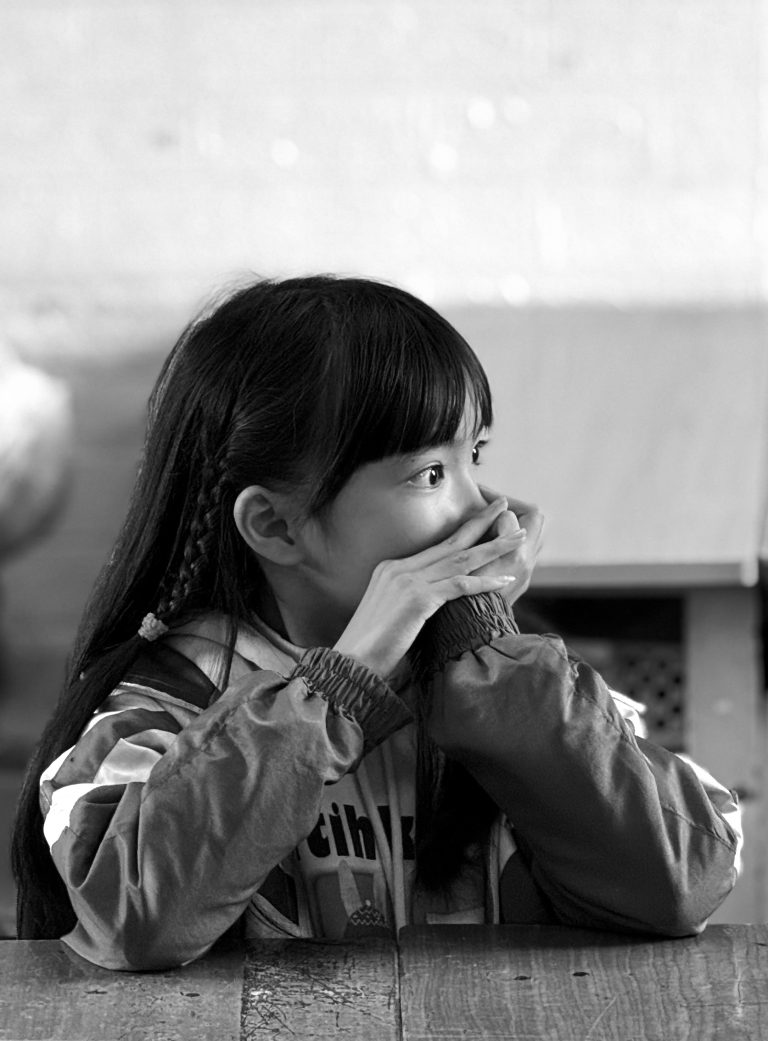
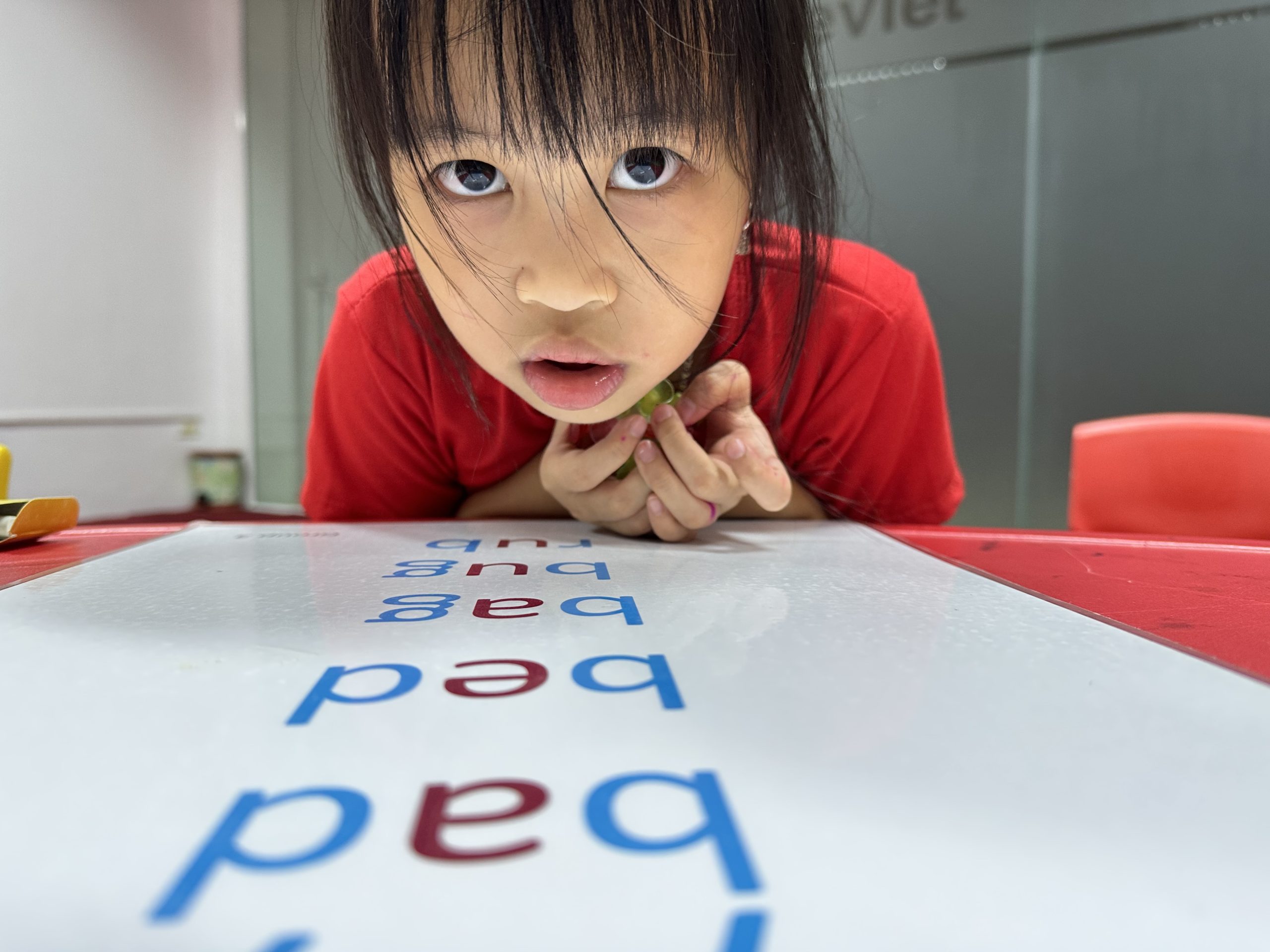
It is more a matter of chemistry, of whether our characters combine. I have always found rather distasteful the idea that teachers “make fully formed people”, and still resist it now. Looking at the personalities of my youngest students, I already find all of the components of who they are. In their eyes, the way they laugh and interact, they’re not raw clay awaiting the potter’s hand, they already have their own agency and history tracing back to their mothers wombs and the circumstances therein. So my power to transform the way they view the world doesn’t only reside within my hands if at all. Rather it is a function of the alchemy of two personalities colliding. Whether a student “connects” is often not up to me.
Of course that doesn’t stop me from recalibrating my approach to meet the need of the child if I am on the wrong path. Perhaps I was too energetic, bringing thunder when they needed a whisper. It often works, as Vietnamese children seem particularly generous and forgiving. However, I also don’t believe in insisting on rapport that isn’t ready to bloom. Sometimes it is okay to let them find me or to let them go. A teenage girl was always coming to class in a confrontational stance, but as soon as my female colleague covered for me one day of sickness, her her whole face opened like a flower finding sun. Another time, a completely unruly boy would wreak havoc in my colleague’s class but would be completely calm and cooperative when studying with me. We cannot control our students’ personalities because we cannot control their past. Whatever experience made them into who they are dictates what they need and what they unconsciously look for in the adults whose role it is to educate them. I know students that who would benefit greatly from my tutoring. But they are completely uninterested in me and that’s okay.
I would be a liar if I didn’t admit that I have my favourite students that I spend a disproportionate amount of time and effort trying to connect with and provide the most fun lessons for. I can only justify the time and money spent on them through my fondness for them. But I think it is important to have these kinds of students to keep in touch with the deep work of nurture and development that is more profound than just a good lesson plan or a fun time in the classroom. Even if it isn’t scalable and is hard to justify, it is a good practice for the soul of a teacher, and that subject might merit its own article.
So, I am grateful to this mother for her nice thought. But I have to decline the responsibility for the blaze of passion supposedly lit by my hand. They arrive already luminous and carry that light on their own. If they judge me worth trusting, then I will join in that light and perhaps make it grow a little, before sending them on to seek other mentors along the way.
We are not the architects of people. We teachers each place one cobblestone on a road stretching far beyond us, and I find this perhaps bittersweet thought to be somewhat comforting. To believe in the strength that resides in each of my students to venture forth towards destiny, to walk their own path and becoming whoever they’ll find themselves to be.